Letters
Symbolism in Nature
Insight alone does not reorganize the system. The body also needs to understand.
Not all symbols are created equal.
Symbols allow us to observe complex inner processes without immediately collapsing them into personal history. But something happens that thought alone cannot reproduce.
Nature has a way of making certain inner dynamics immediately understandable.
Mountains.
Ocean.
Wind.
Fire.
Darkness.
Light.
These are not abstract ideas.
The body recognizes them instantly.
When you stand in front of the ocean,
or on a mountain,
or near a fire,
something in you recognizes what is happening — without needing words.
The quality of understanding changes.
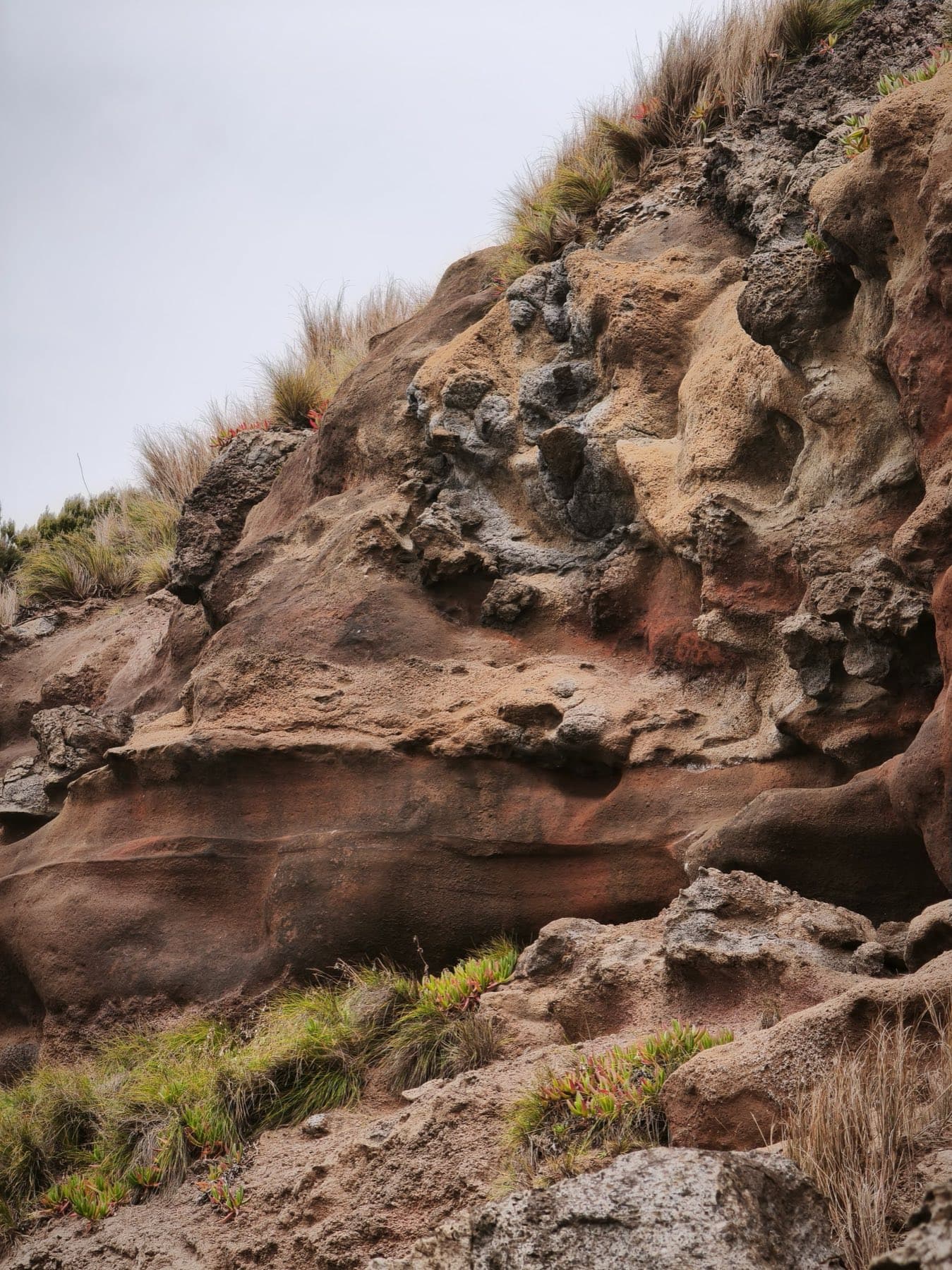
Take anger, for example. It does not move in a single way.
Sometimes it builds slowly, under pressure — like a volcano.
Contained. Dense. Waiting.
Sometimes it spreads rapidly — like wildfire.
Fast. Consuming. Difficult to contain.
Sometimes it comes in waves — rising, breaking, receding.
Sometimes it fractures — sudden, disorienting, like an earthquake.
Sometimes it moves like a storm system — gathering force, pulling everything into it.
Each of these carries a different rhythm.
A different origin.
A different impact on the people around us.
We can describe those differences analytically.
But the moment we encounter them symbolically — especially in the natural world — something becomes clearer.
The pattern is no longer something we think about.
It is something we recognize.
And when the body is allowed to meet those environments directly — standing on a windy cliff, watching the ocean, feeling the contained force of something vast — that recognition deepens.
And the recognition has somewhere to land.
For many people, this is where insight begins to translate into movement.
They may have spent years understanding themselves.
They can describe every mechanism, every trap, every reaction.
And yet — nothing changes.
I know this experience well.
At one point in my life, I could describe every dynamic in great detail — and still find myself unable to move differently inside it.
It is a particular kind of frustration.
Because insight alone does not reorganize the system.
The body also needs to understand.
This is where environment becomes more than context.
It becomes part of the work.
And this is also a core part of my work: supporting the translation between what the system recognizes and how it learns to live from that recognition.
When symbolic understanding and bodily experience begin to align, change stops depending on effort alone.
What once felt almost impossible begins to require less force.
But symbolism does not end there. It must return to daily life.
Once a pattern has been seen — and felt — the work becomes learning how to live from that recognition.
This takes practice.
But practice done in connection — with the body, with the environment, with others — moves very differently from practice driven only by discipline.
And it tends to hold.
Until next time,
Inês