Letters
The Three Dogs
When the core leads, the system reorganizes.
Imagine you’re going for a walk, and you have three dogs with you.
The oldest is a big, slow dog. He knows the way. He doesn’t rush. He doesn’t get distracted. And no matter how much you’d like to move faster, he cannot be outpaced.
The youngest is small, fast, and nervous. He runs ahead, turns back, looks at you as if to say, “Why are you so slow?”, circles around you — and then does it all over again. Restless, impatient, easily bored.
The third dog is in the prime of life: strong, reactive, alert. Always ready to chase, explore, engage. Everything that moves catches his attention.
The oldest dog is the body.
The youngest is the brain.
The middle one is our emotional system.
The path is life.
And your task is simple to describe — and not easy to do:
To walk the path while keeping all three dogs with you.
No one learns this overnight.
The mind has to be calmed, or it will exhaust itself — and eventually, you’ll have to carry it.
The emotional system has to be trained, or it will pull you into every stimulus, every reaction, every drama.
And the body — the body cannot be rushed. It always sets the pace, whether we listen or not. Especially when it has been carrying too much for too long.
Sometimes this takes years. Sometimes it happens in tiny increments. Both count.
Now notice something important.
You are not the dogs.
And you are not the path.
You are the one holding the leash, even when your hands feel tired.
The one orienting.
The one deciding, moment by moment, how to respond.
Even when you lose the grip for a moment — and find it again.
You are the layer that makes the walk possible.
That is what I call the core. In practical terms, it’s your capacity to orient, pace, and respond rather than react.
When the core is weak or overwhelmed, systems compensate:
through overthinking, emotional volatility, physical exhaustion, or relational strain.
When it is strong, complexity becomes easier to navigate.
Decisions simplify.
Boundaries require less force.
Recovery happens faster.
Most of us were never taught how to do this.
We were taught to identify with one dog and suppress the others.
To let the mind drag the body.
To let emotions dictate direction.
To override physical limits in the name of productivity, growth, or meaning.
Over time, this creates exhaustion, fragmentation, and a sense that life requires constant effort just to stay upright.
The work I do — in all its forms — is about restoring this kind of internal leadership.
Not by controlling the dogs.
Not by silencing them.
But by re-establishing a clear point of orientation.
When the core leads, the system reorganizes. Pacing improves. Reactivity softens. Energy stops leaking into compensation.
This is not about optimization in the productivity sense.
It’s about coherence.
If this feels familiar — if you recognize yourself in the tired dog, the restless one, or the reactive one — there is nothing wrong with you.
This is what untrained systems under load look like.
But they can learn.
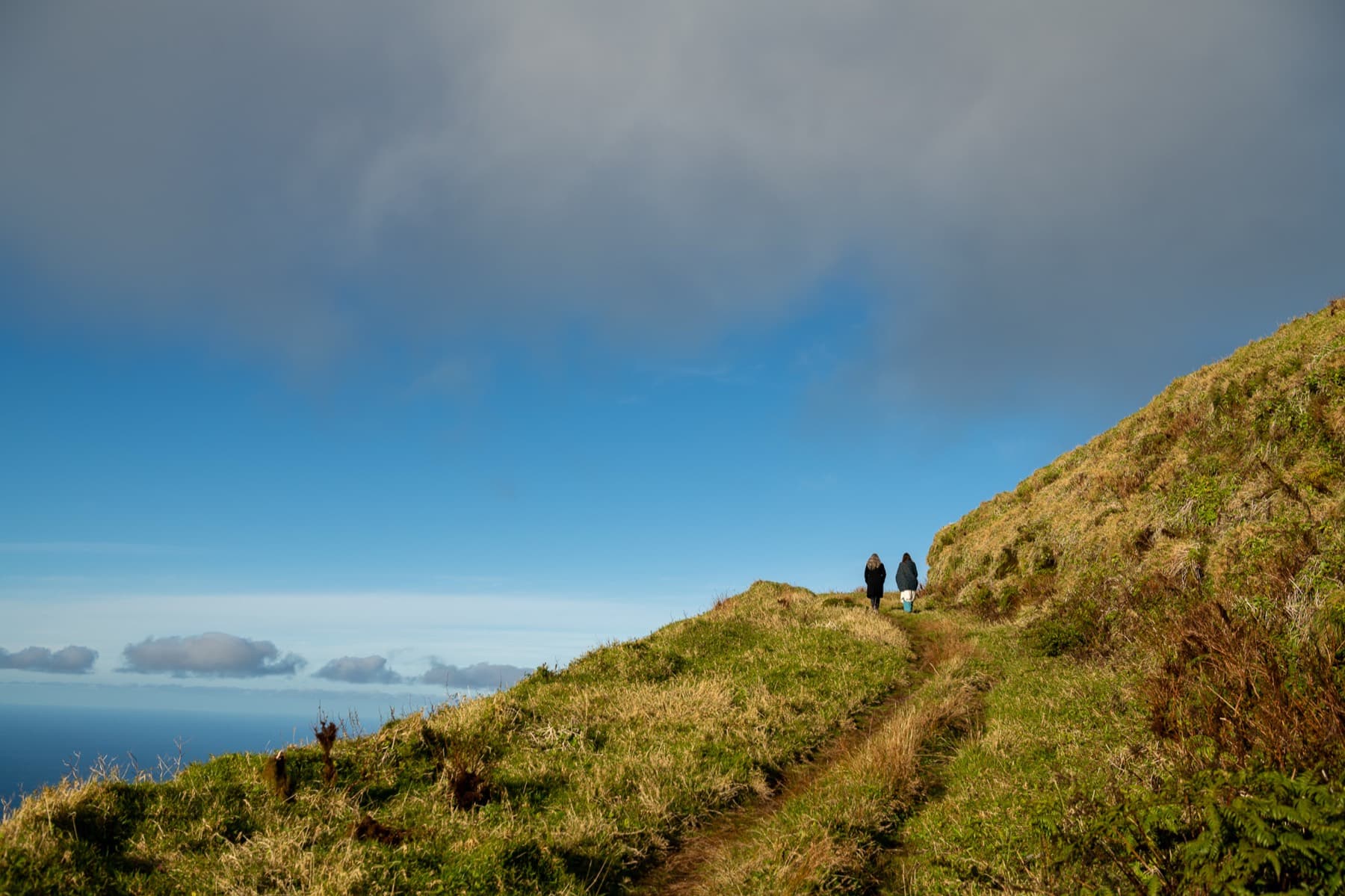
This is exactly what my calibrations on São Jorge are designed for.
They are not retreats.
There is no packed program.
No shared rooms.
No emotional choreography.
They are carefully designed environments where your system can re-learn orientation — through pacing, land, silence, rhythm, and precise intervention.
And if you’d like to experience the way I work:
Enter sessions happen regularly. They are a group experience designed to help you recognize what is yours, what is not, and whether this is the work for you right now.
This work is not about becoming someone else. That would be a waste of each of us.
It’s about becoming able to stay with your own life — without dragging parts of yourself behind you.
Until next time,
Inês